Where Have All the Flowers Gone (2025)
Buskerud Art Centre
Where Have All the Flowers Gone
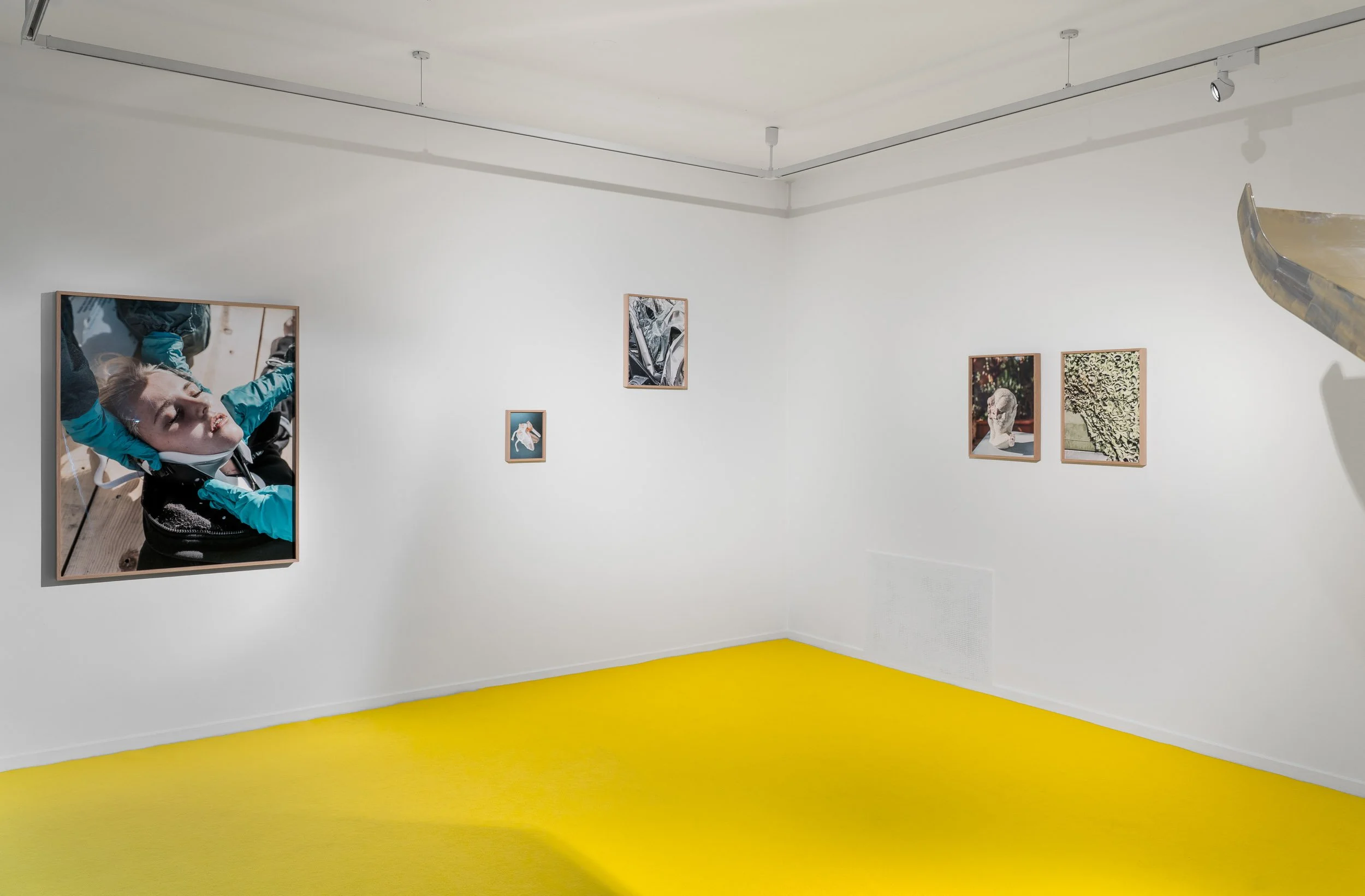
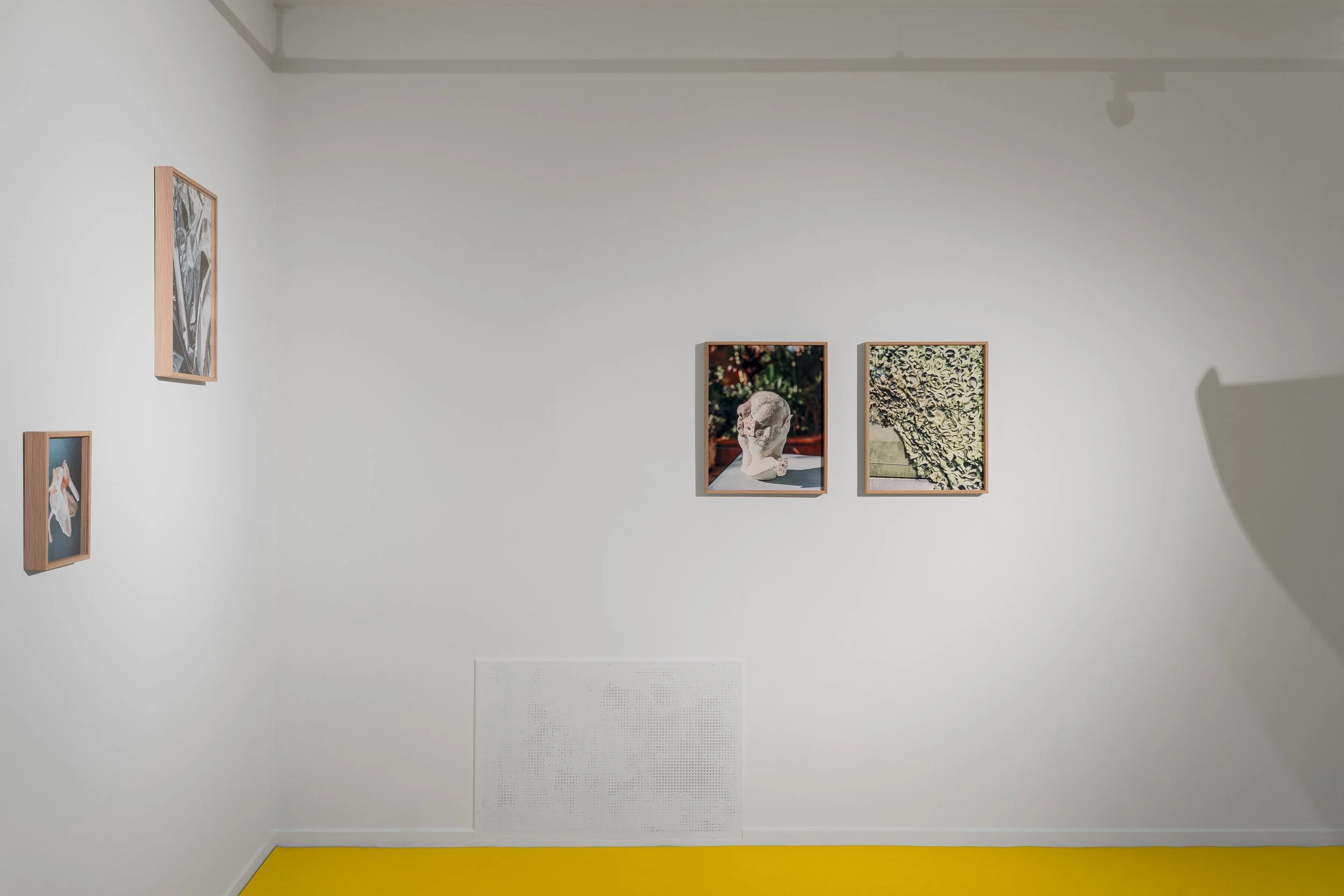
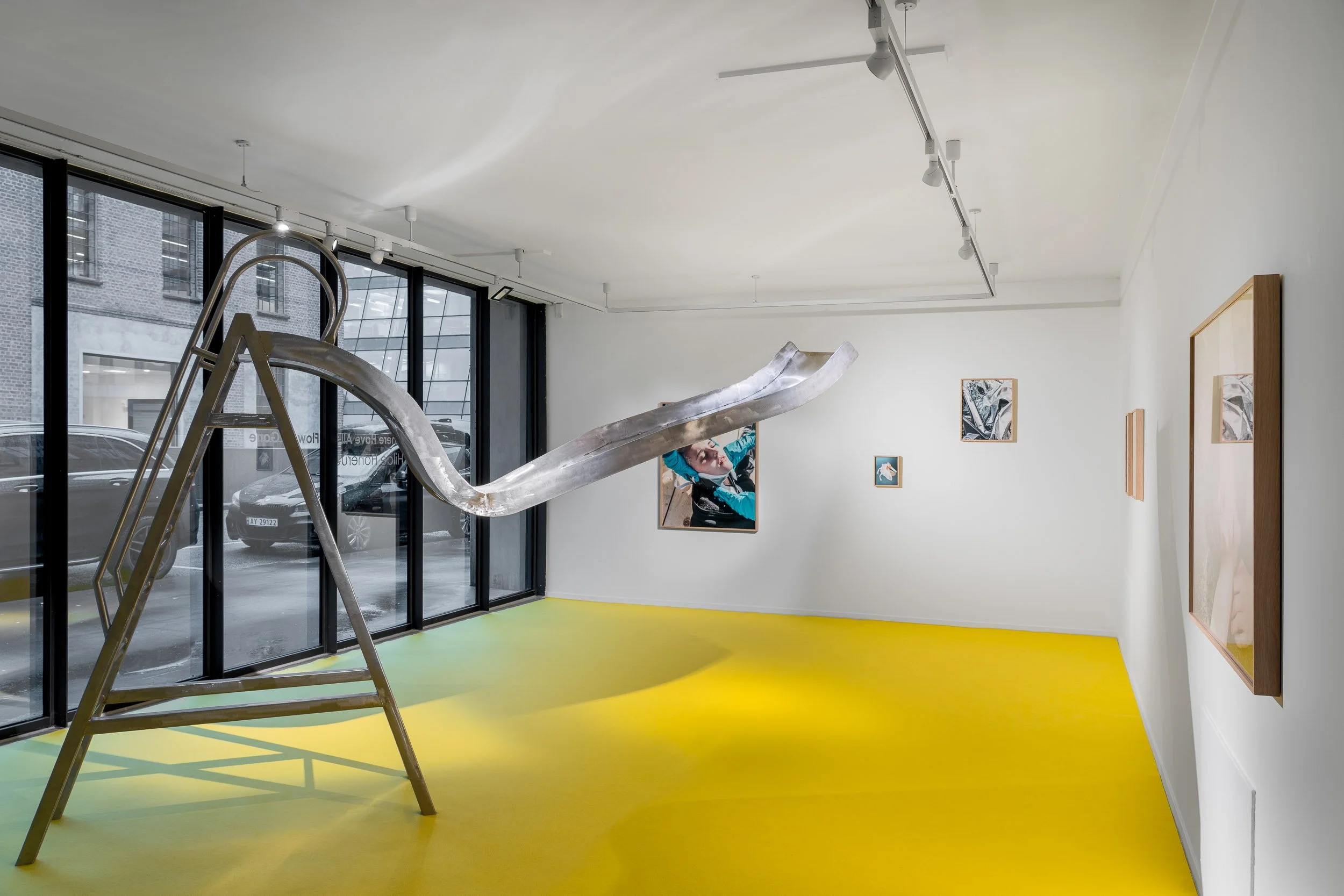
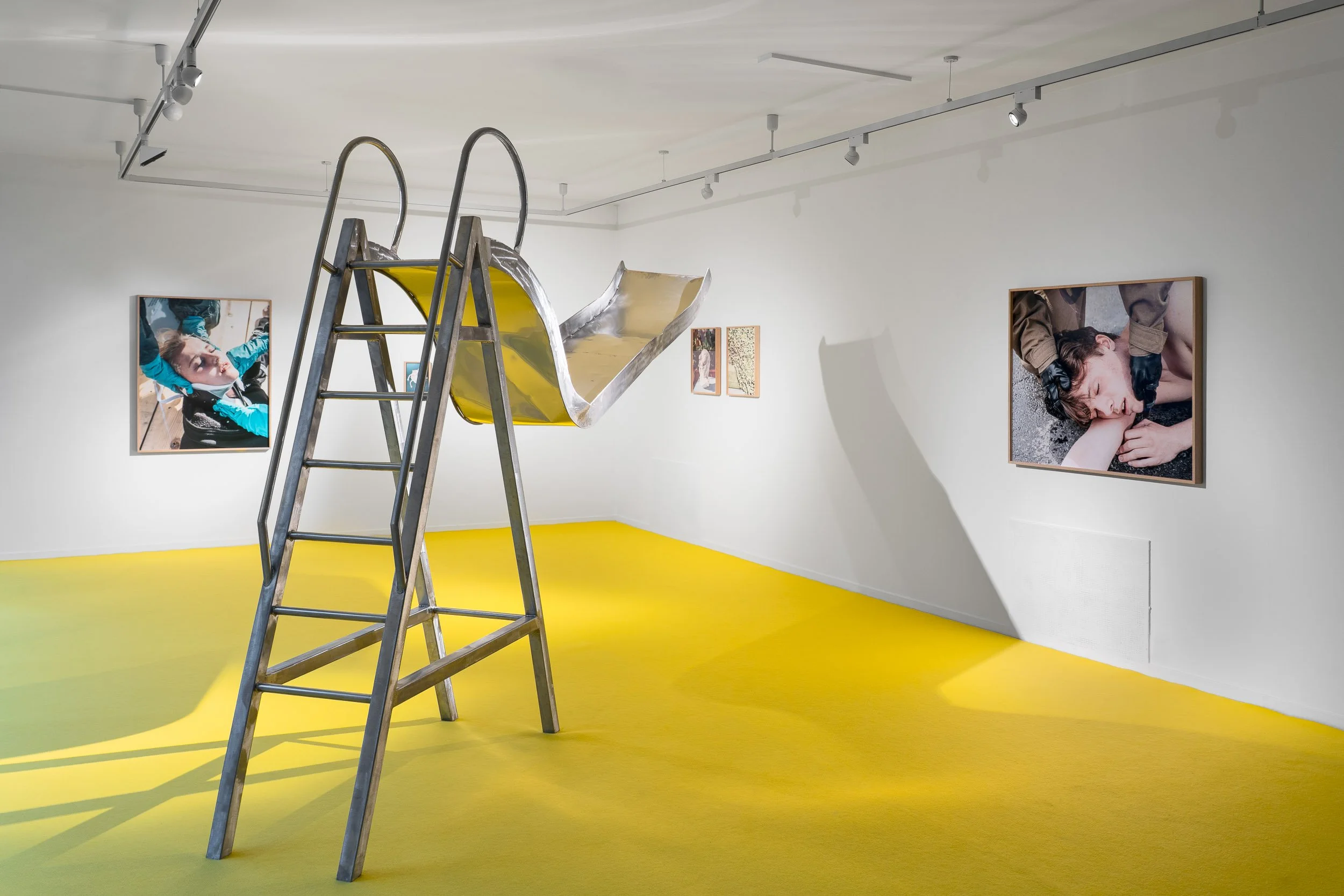
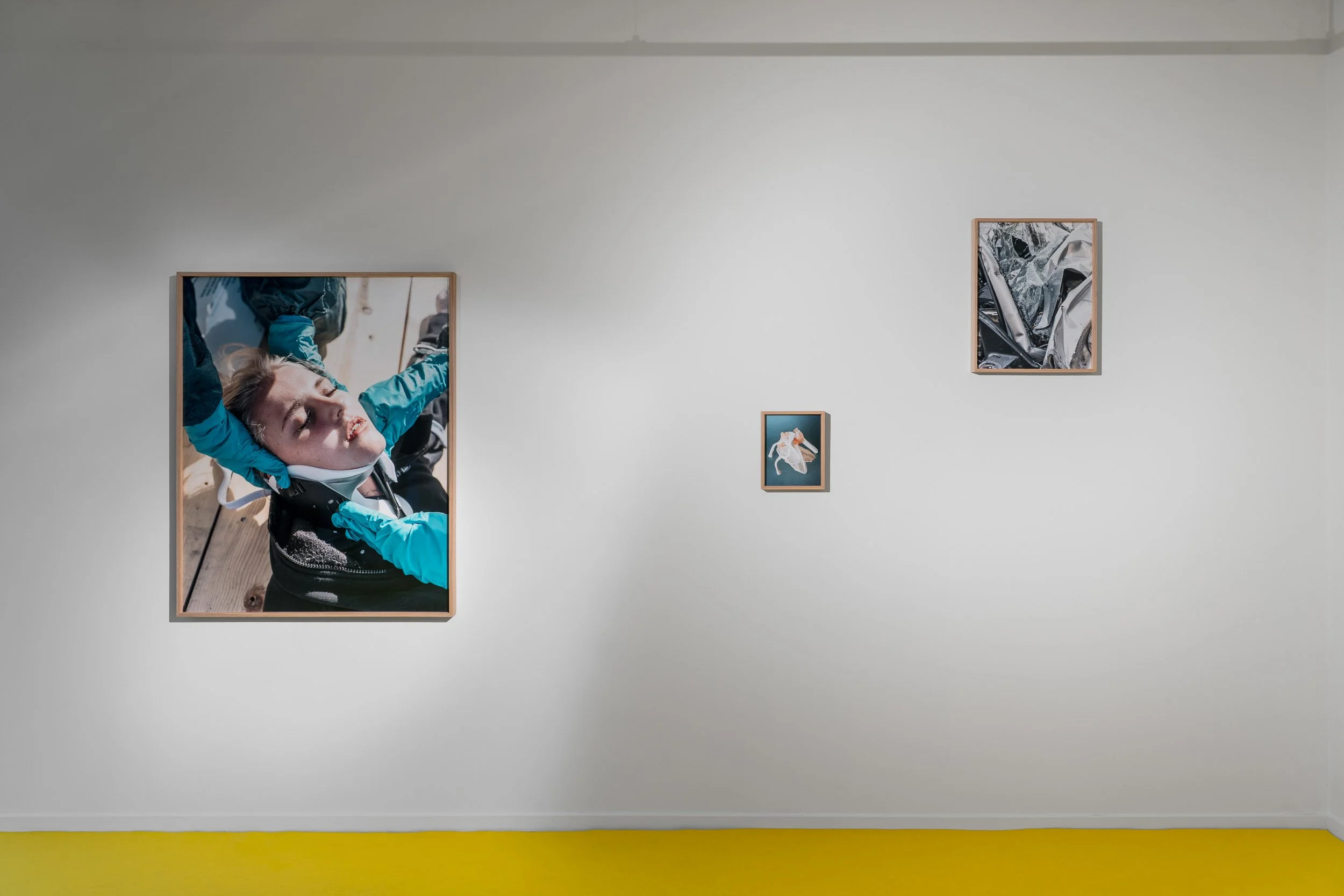
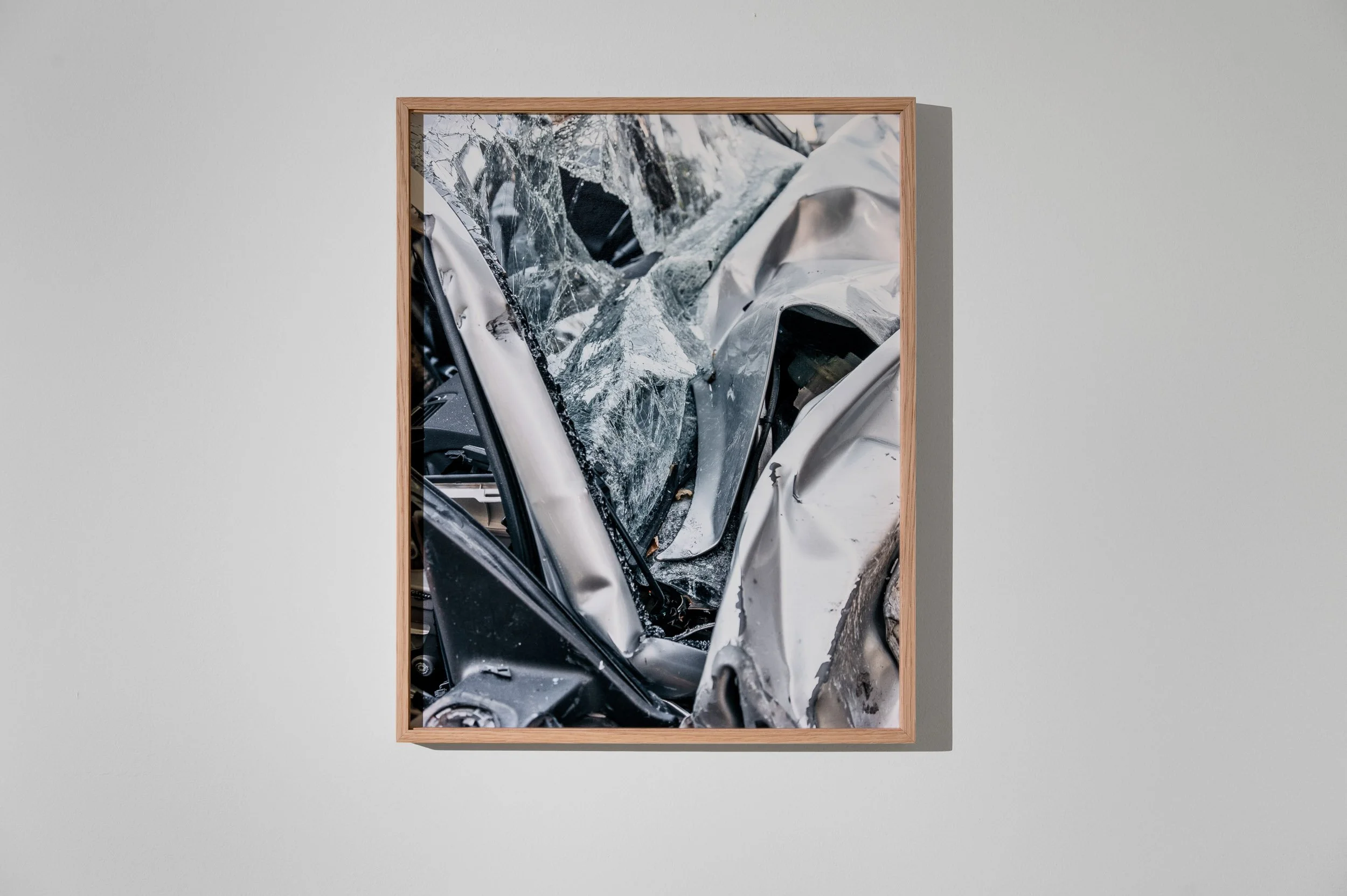
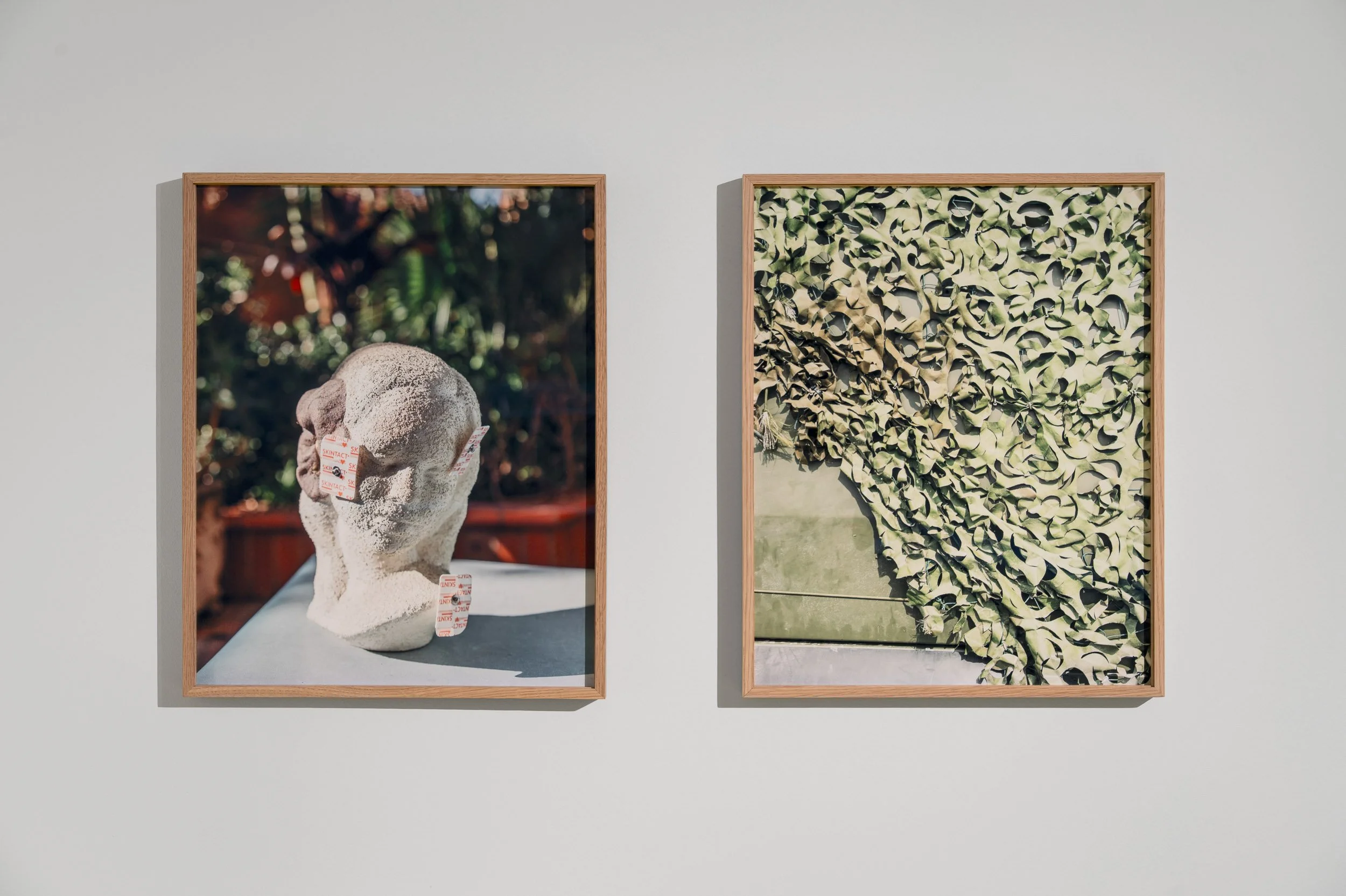
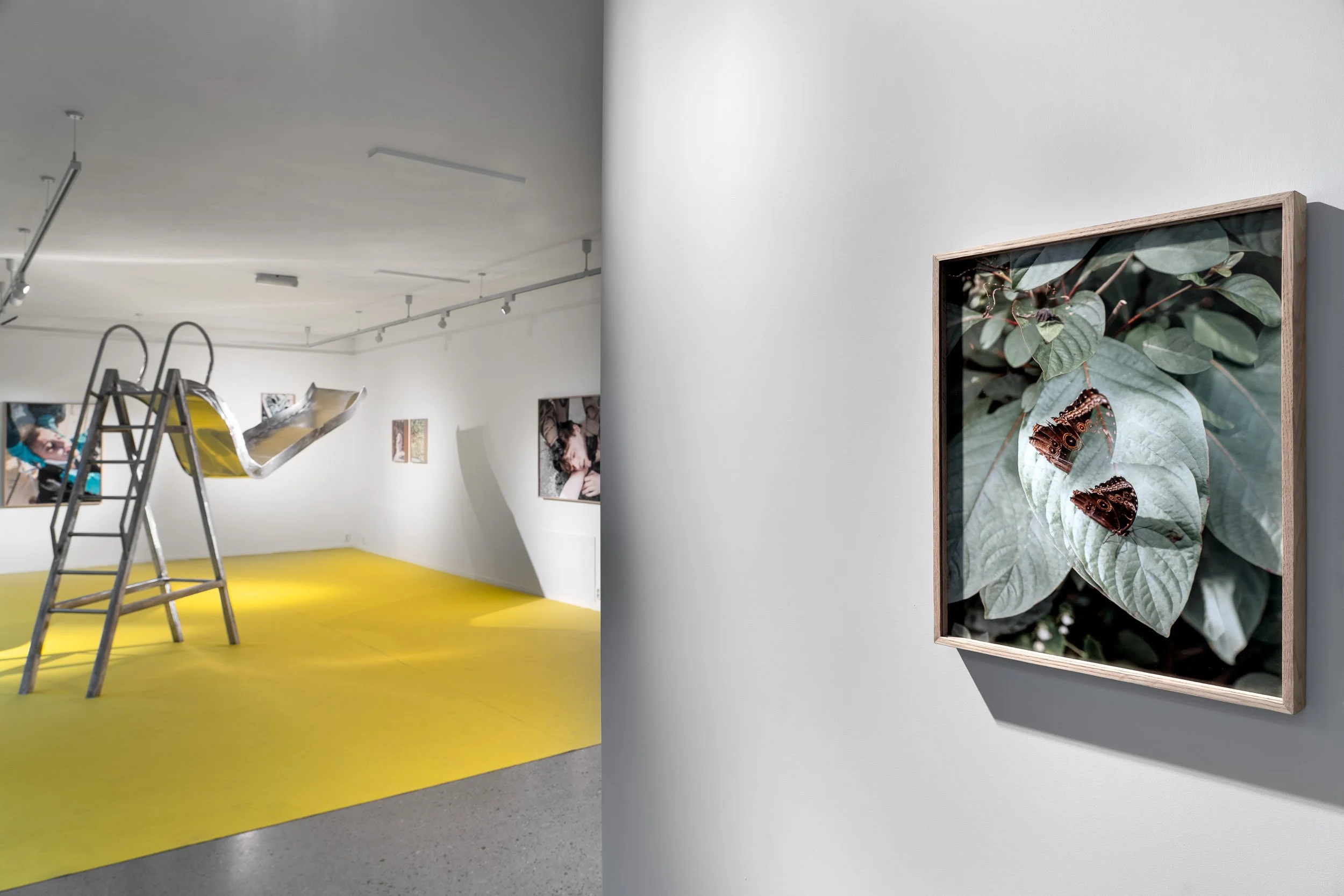
In Where Have All the Flowers Gone, Hilde Honerud continues the series Regarding the Pain of the Future - an ongoing project that investigates how the crises of the future are imagined, prepared for, and rehearsed. The project springs from an anxiety about the world her children will grow up in, and a desire to understand our relationship to a threatening future. The exhibition builds on extensive fieldwork reminiscent of journalistic methods: Through travels in Norway and Europe, Honerud has sought out places and situations with both news value and symbolic resonance. Here, photographs of exercises simulating violent events are shown side by side with images that address the loss of nature, shedding light on how a vulnerable world is the very foundation of our existence.
Several of the photographs are taken during large-scale emergency preparedness exercises that stage the catastrophes we fear the most. We see young people - often only 18 years old - practising to save lives. They learn to act quickly, to stabilize, to create order in the midst of chaos. They navigate through scenarios where the boundary between simulation and reality is blurred. Their faces carry the weight of seriousness and responsibility, but also a silence - a recognition that this is more than just practice.
The title of the exhibition refers to Pete Seeger’s protest song Where Have All the Flowers Gone (1955) - a song about the senselessness of violence; a cycle of life, death, and repetition. Whilst the song asks, “Oh, when will they ever learn?”, Honerud lets the question linger as a quiet echo of resignation, care, and wonder - a reminder that tragedies do not skip generations but are perpetuated by them.
_
When I was around seven or eight years old in the early 2000s, I reluctantly joined the Scouts because my parents believed it was important to learn how to manage on one’s own - even as a child. This meant being able to light a fire, carve with a knife, and acquire skills that could be crucial if one day you had to fend for yourself in nature. My carving skills have faded, but the words that made the strongest impression remain: Always prepared!
_
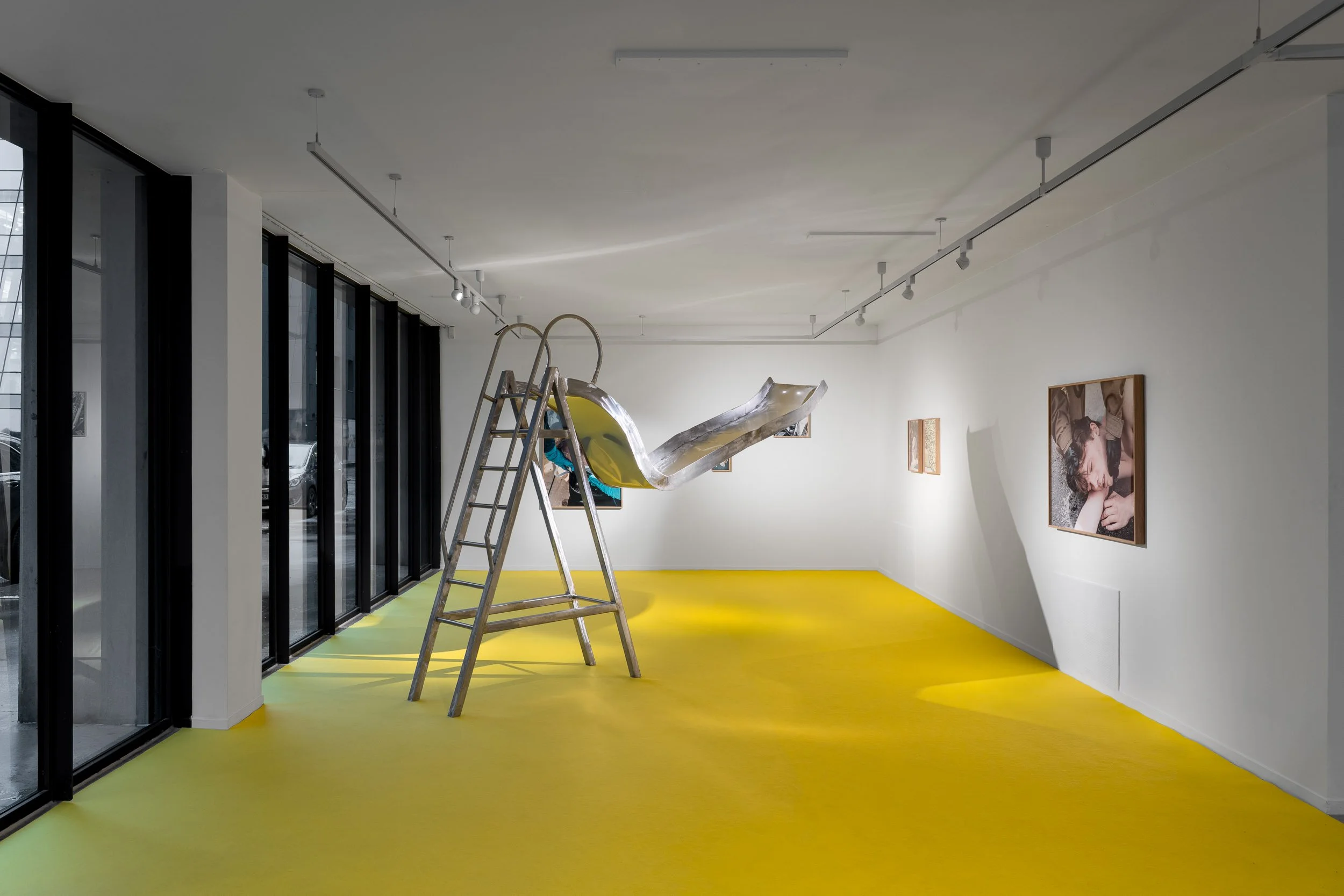
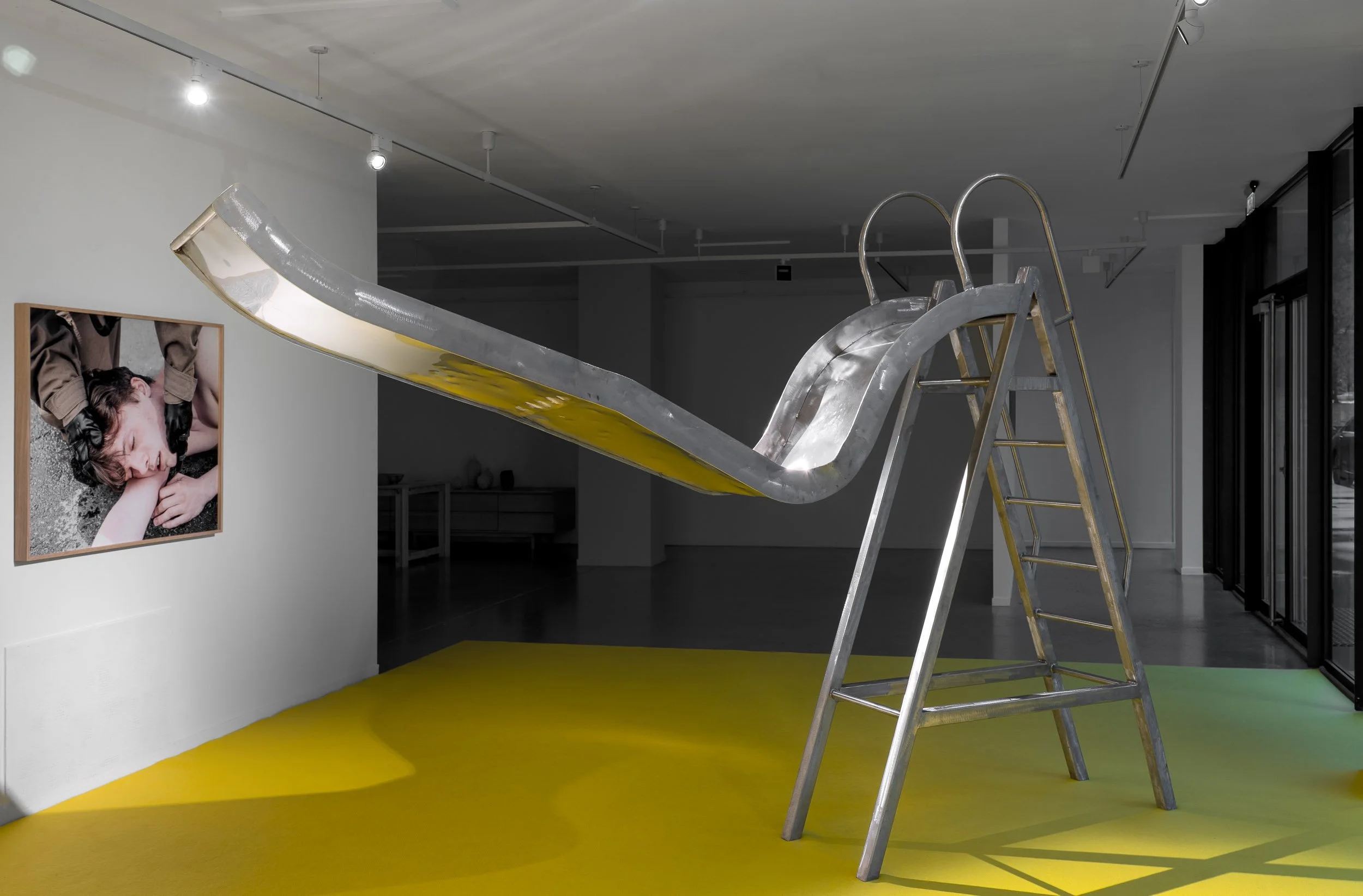
In the middle of the exhibition space stands a slide. It reminds me of the one I played with as a child. I would climb up, sit down, and let gravity carry me safely back to the ground - laughter followed me all the way down. In Honerud’s exhibition, the notion of safety and play is turned upside down. The soft curve is broken and points upward, toward the unpredictable. Gravity has lost its direction. The slide, a symbol of childhood and play, becomes an image of the transition between innocence and responsibility, between a world that was and one that awaits. It gestures toward a world where the future no longer appears as a promise but as a duty.
The exhibition highlights a paradox: that it is the young who must prepare to save a world shaped by the choices of previous generations. Those who are just on the threshold of adulthood already carry the burden of a future they did not create. The brutal is handed over to those who have barely begun. Through the interplay between the documentary and the staged, a space emerges in which the future no longer appears distant, but as something that must be rehearsed, repeated, and practised. The catastrophe becomes both present and distant - a part of reality before it has begun.
The weight of the words presses heavily on the jaw as their seriousness becomes clear: Always prepared!
Text by Christine Bruu, November 2025
The photographs in the exhibition were taken during various PLIVO exercises in Kongsberg in 2024 and at CBRNe Samvirke in 2025, where the military, fire squads, ambulance crews, and police train for the handling of ongoing life-threatening violence (PLIVO). The slide was made in collaboration with Harald B. Bråthen and Mateusz Madej at OTB Service.
The exhibition is supported by Fritt Ord.